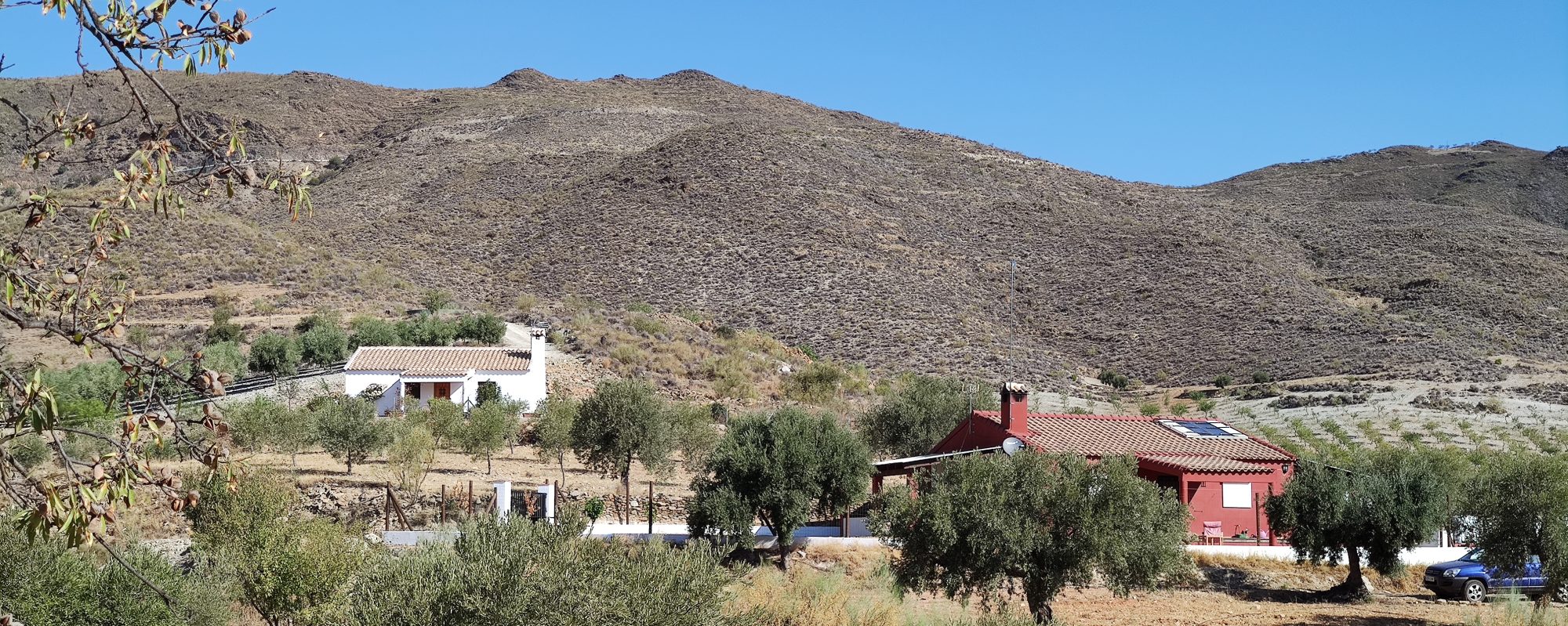
When people see “off grid” typical images that spring to mind can be of people living in a shack up the back of beyond, using a hole in the ground for a loo, not washing more than once a month, animals, mud and possibly smoking a few weird herbs every so often.
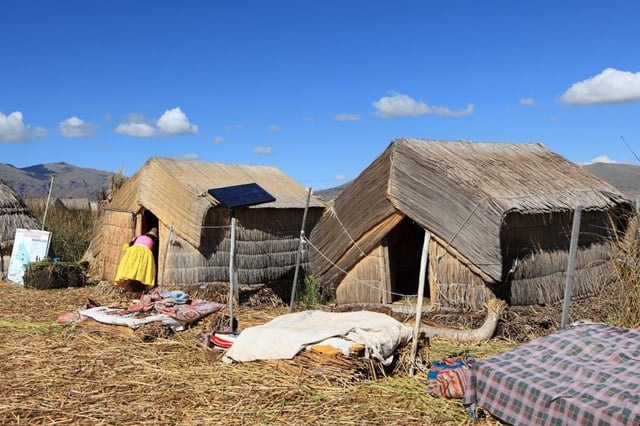
But no! Modern off-grid living however offers every desirable convenience you can think of, in smart and well-appointed homes.
We chose Casa Roja based on lots of factors, and it’s important to be clear in your own mind what you want and need from a property and location before you can turn your dream into reality.
Extremely high on the priority list came peace, seclusion and privacy. It’s well known that living in Spain is incredibly noisy – apparently it’s the second noisiest country in the world but I can’t give you the exact source of that statistic.
Off-grid kinda came with the house we felt suited our needs best.
However, once we were here, adding extra off-grid features made perfect sense.
Sunshine that pays your bills!
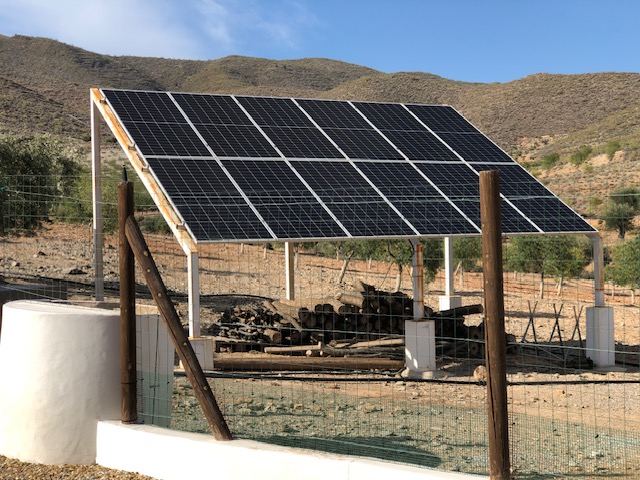
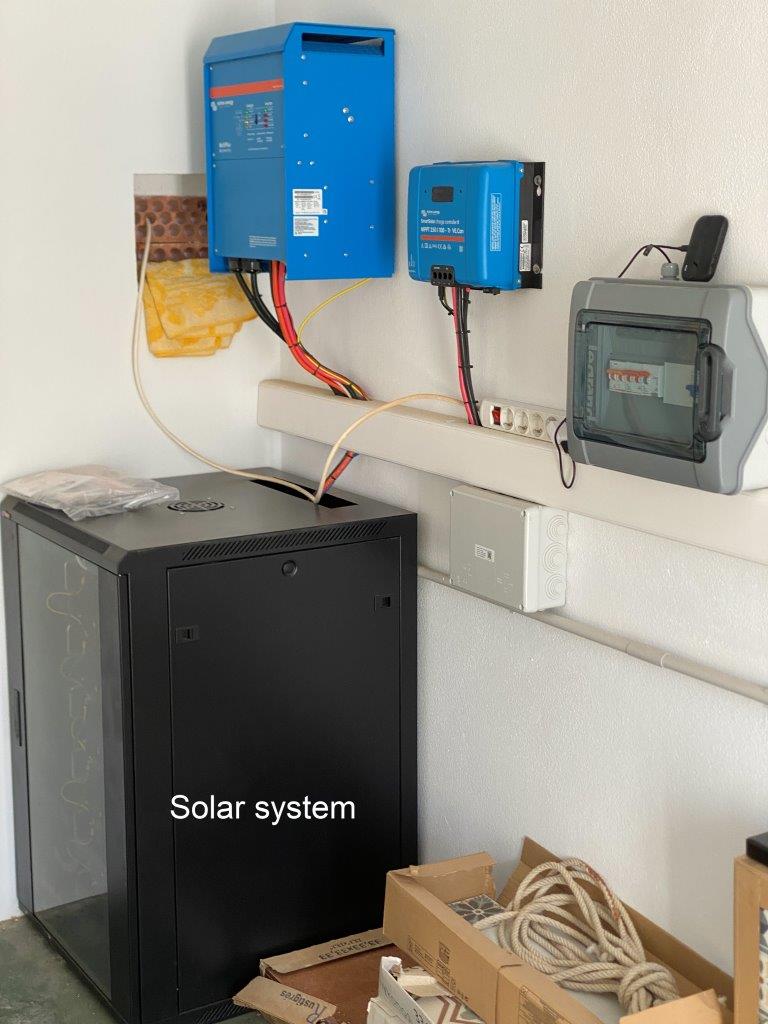
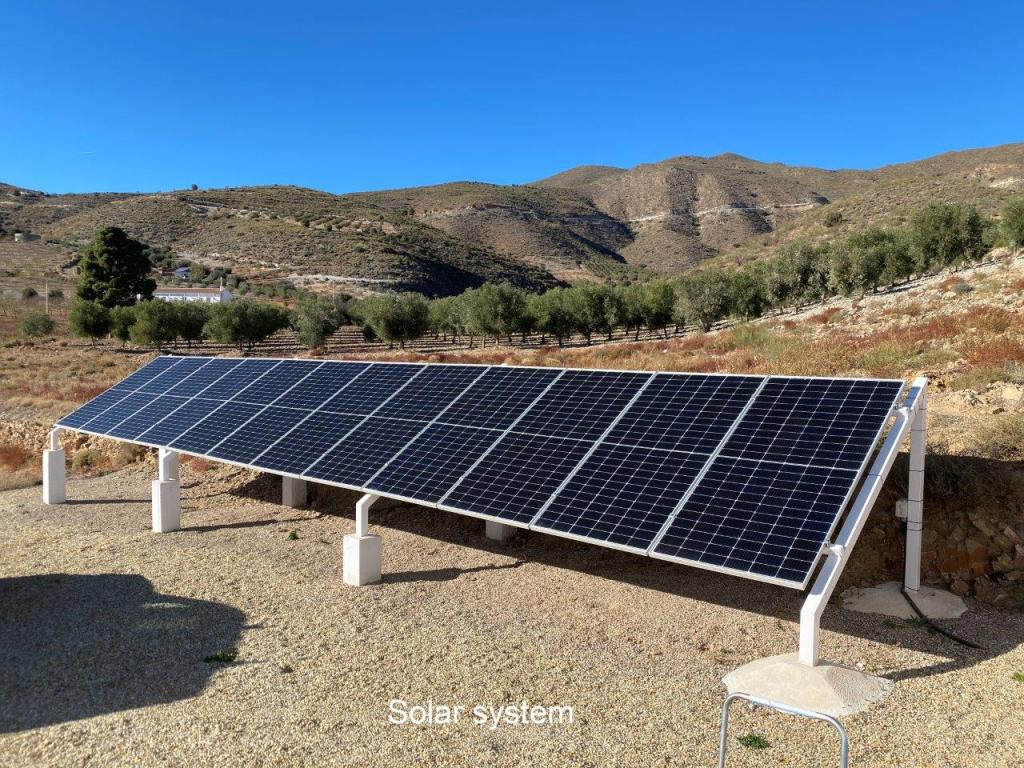
When we bought Casa Roja it was important to us to make maximum use of the huge hours of sunshine, so the first thing we did was have a large solar water tank installed. Free hot water – who wouldn’t love that? But we always intended to go further. Just before all the prices went silly on electric (after Covid) we engaged Ecocorp Solar to install a 5kw solar array on the Victron system, with feedback of excess to the grid. It reduced our bills to almost standing charges only. Then we added cloud storage, which means all excess is ‘banked’ for future use. We estimate 90-95% of all our electricity use (including running the air con) is paid for by free sunshine.
Free water too
Our water is fed by deep groundwater boreholes. It’s crystal clear and tastes amazing (far better than town water, recycled and treated I don’t know how many times, being fed through old pipes). It is filtered but not treated in any way, and we change and wash the filters about once a month. It has a pH of around 8-8.5 so slightly alkaline. (You can add further treatment and water softening systems if you wish).
Again we didn’t intend this as part of the plan, but we know for example that our borehole supply has been more consistent in quality and more reliable in supply than other areas on mains water not too far away.
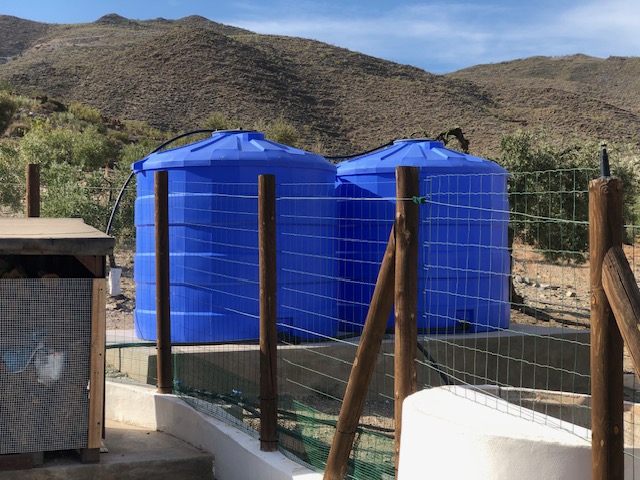
Also, we added 10,000 litres of water deposit to Casa Roja in 2 tanks, which we fill from the borehole as a backup, in case of unforseen circumstances like a well pump failure. If anything goes wrong you can bet it’s usually on a weekend when nobody is available for a call out! That’s only because it’s the house we live in. Many houses In Spain connected to the mains water supply also have a water deposit which gets refilled overnight. It’s a fairly common feature to guard against any periods of shortage for whatever reason.
Septic and holding tanks
Both houses have a septic/holding tank. Casa Mary’s was installed when she moved in (pre-purchase) and Casa Roja’s was installed by Blocked Drains R Us in Albox. Yes this is what they’re called! Both tanks have been checked and emptied each year by Blocked Drains R Us since we had ours installed.
Using a tank like this it’s important to not use chemical detergents and cleaners if at all possible. Use natural cleaners such as white vinegar and lemon juice in a spray bottle (white vinegar is effective against bathroom limescale and for toilets), bicarbonate of soda (great for cleaning fridges) and biodegradable/eco washing powder or liquid and washing up liquid. Hydrogen peroxide and sodium percarbonate are eco-friendly alternative to bleach.
You can also make natural anti-bug floor cleaner at home relatively cheaply. Some essential oils are known to be highly insect repellant. You can make your own anti-bug cleaner by adding these to your mop bucket of hot water – a capful of eco fabric softener, a tablespoon of washing up liquid, a tablespoon of baking soda (sodium bicarbonate) and 4 drops of lavender oil, 4 drops of peppermint oil, 4 drops of clove oil and 4 drops of citronella (lemongrass) oil. Bugs hate lavender even though we think it smells divine!
Recharging your tank might need to be done occasionally with extra microbes. We have found online a product called Mr Bacteria which you add, and there’s a winter and summer version. https://www.mrbacteria.es/septico-c97/
Freedom from outages
Mains services are great, but in rural Spain we get a few outages every year. Outages of power, outages of water, and most recently, the country-wide energy blackout when the entire grid went down for about 24 hours. This left people stranded in many different ways, including not being able to cook, to pump water into their homes, have light and heat for the most basic day to day tasks, or internet services for communication.
In contrast, we ran on without even a second’s break in service. The only way we knew of a problem was the warning flag of ‘grid down’ from the Victron central computer.
Sustainable living
The situation here with the independent wells and solar make it ideal for people wishing to live off grid and adopt a more eco-friendly, sustainable lifestyle. There is space around the mature olives to grow vegetables in raised irrigated beds at Casa Roja, and at Casa Mary there is the option to remove some or all of the young olives to do the same.
The plots can be made suitable for keeping animals on a small scale, but there is a ruined cortijo nearby with quite a large area of open grassland at the front and side. This was previously used for housing and grazing a small flock of sheep, but it hasn’t had any animals there for several years. The owner visits very rarely just to tend the olives, and might be open to renting the cortijo and land for goats, sheep, horses etc (or even selling it if it’s a separate parcel).
Our houses are ‘off-grid capable’
If we wanted to completely disconnect ourselves (Casa Roja and Casa Mary), we could simply add a generator, programmed to kick in if necessary. We haven’t done that yet because honestly, having the mains electric is a bonus. 99% of the time it’s a nice safety net we can call on, especially if we get a long run of cloudy days in the winter. But it’s possible to be totally off grid without too much cost and effort, if you wish.
Of course ‘off-gridding’ has its downsides
Just as being connected to mains services has glitches, so does being somewhat or completely disconnected. Water pumps fail occasionally. Plastic tanks split due to sun degredation (after quite a few years in the heat and glare, mind you). Solar batteries can develop faults. Wiring can work loose. Nothing with services (mains or off-grid) is ever failsafe or foolproof! However, it’s served us extremely well for the last nearly 6 years.
We consider it to be a nice halfway house – not dependant on mains services, but suitably connected when we need it (usually!).
 Casa roja almeria